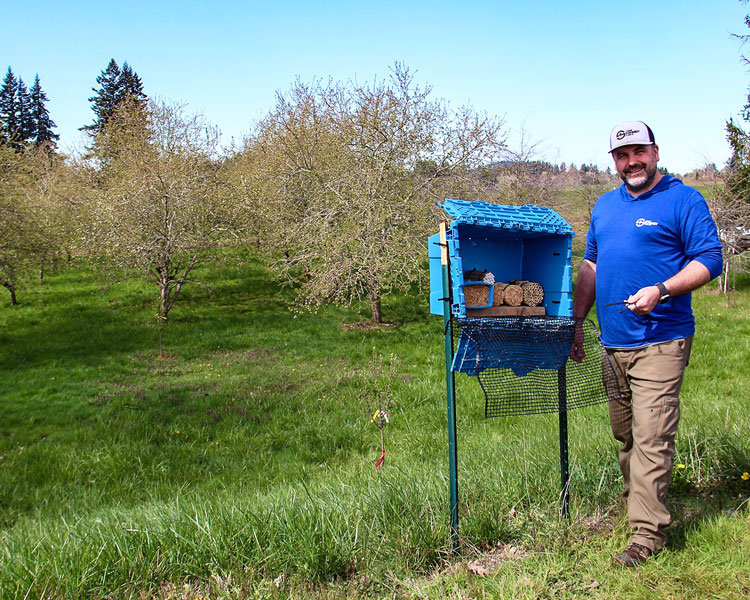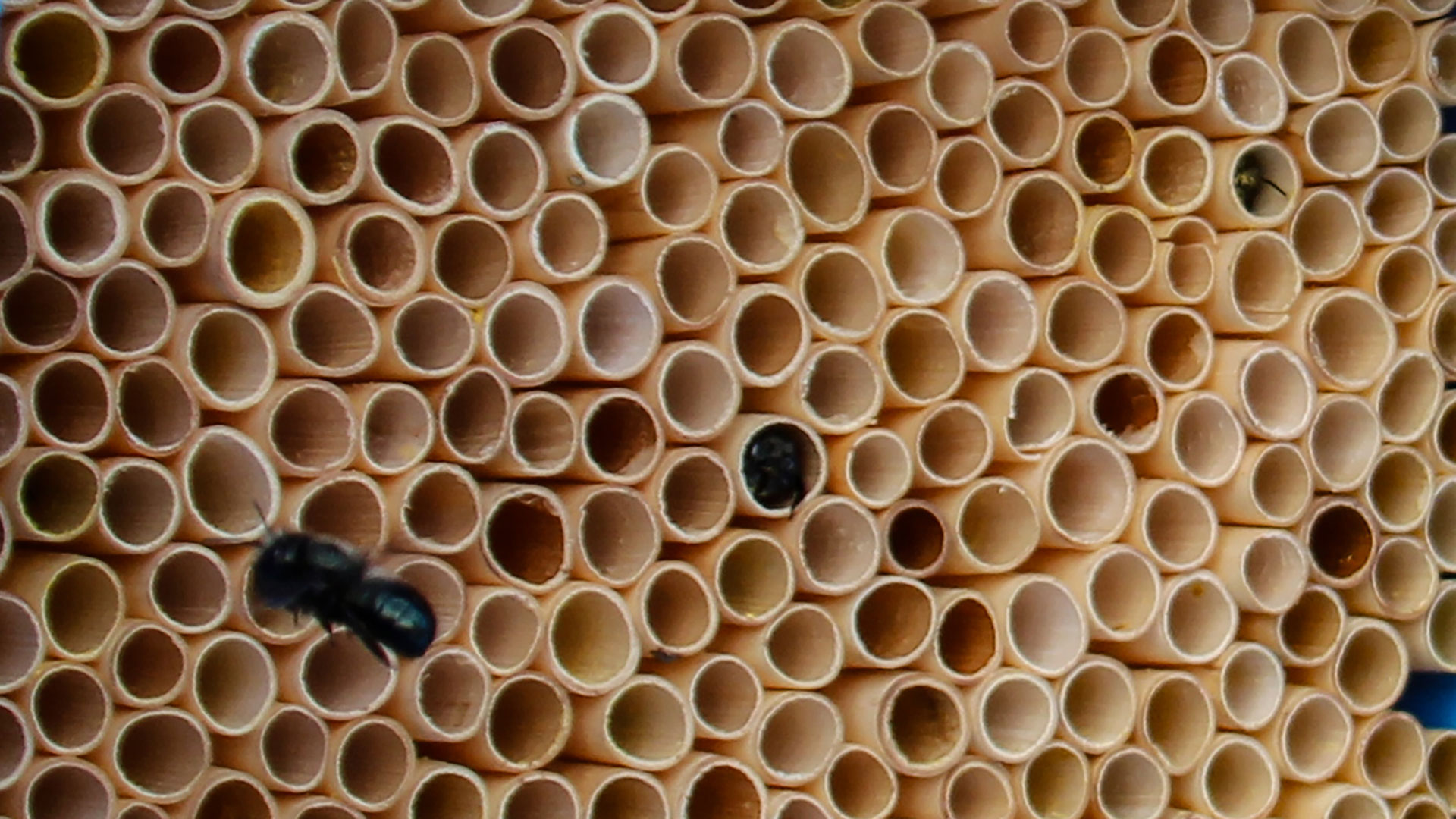
Meet our busiest and smallest workers here at JFS: Mason Bees! Brought on to sustainably increase seed production in our Dolgo crabapple orchard, one mason bee can do the work of 100 honeybees! According to New Plant Development Specialist Jim Donohoe, these little beauties are low maintenance and incredibly efficient.
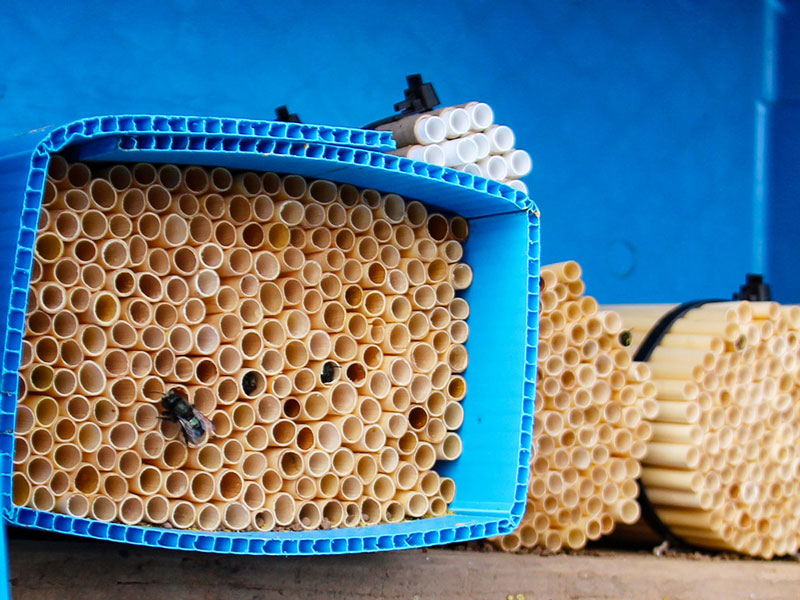
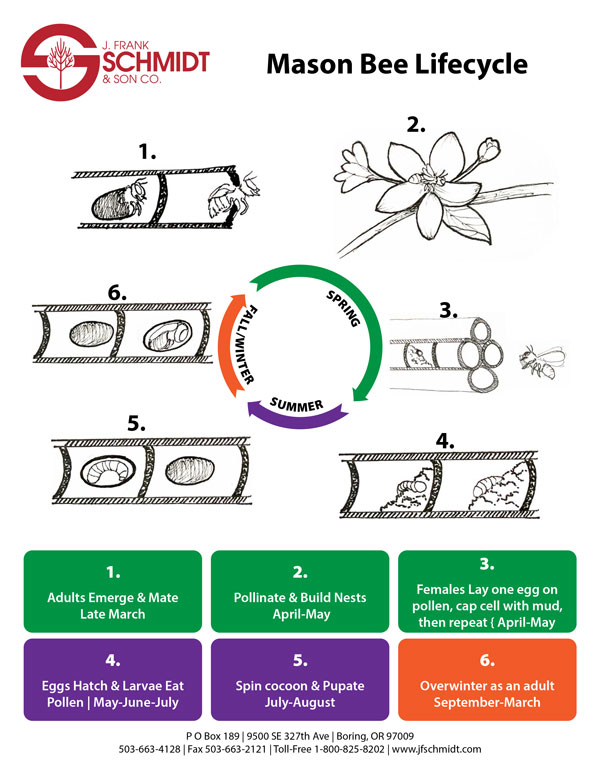
The lifecycle of a mason bee begins in early spring when adult mason bees emerge from their cocoons and mate. Males die shortly after mating, leaving females to build their nests and lay their eggs. Fun Fact: Mason bees are highly attracted to the color blue due to their superior ability to perceive blue light. Each egg and a pollen ball for food is sealed into a chamber in the tube with mud. The process is repeated until the tube is full. Then the female plugs the tube with a thick plug of mud to keep moisture and predators out. Eggs hatch into larvae, which feed on the pollen and grow inside the chambers. They spin cocoons around themselves and transform into pupae which develop into adult bees. The adults hibernate inside their cocoons, waiting for warmer spring temperatures that signal the right time to emerge and begin the cycle again.
This project is sustainable and cost effective because we can harvest and overwinter mason bee cocoons in cold storage, enabling us to manipulate the release of bees year after year, timed to meet our pollination needs both in the seed orchards and our new plant development pollination projects helping us produce seed we cannot purchase.
Please keep your eyes peeled for bright blue bee houses scattered throughout seed orchards and experimental blocks on the farms. Always something abuzz at JFS!